Zi Wei Dou Shu vs. Tarot Cards: Which Eastern or Western Spiritual Tool is Right for You?
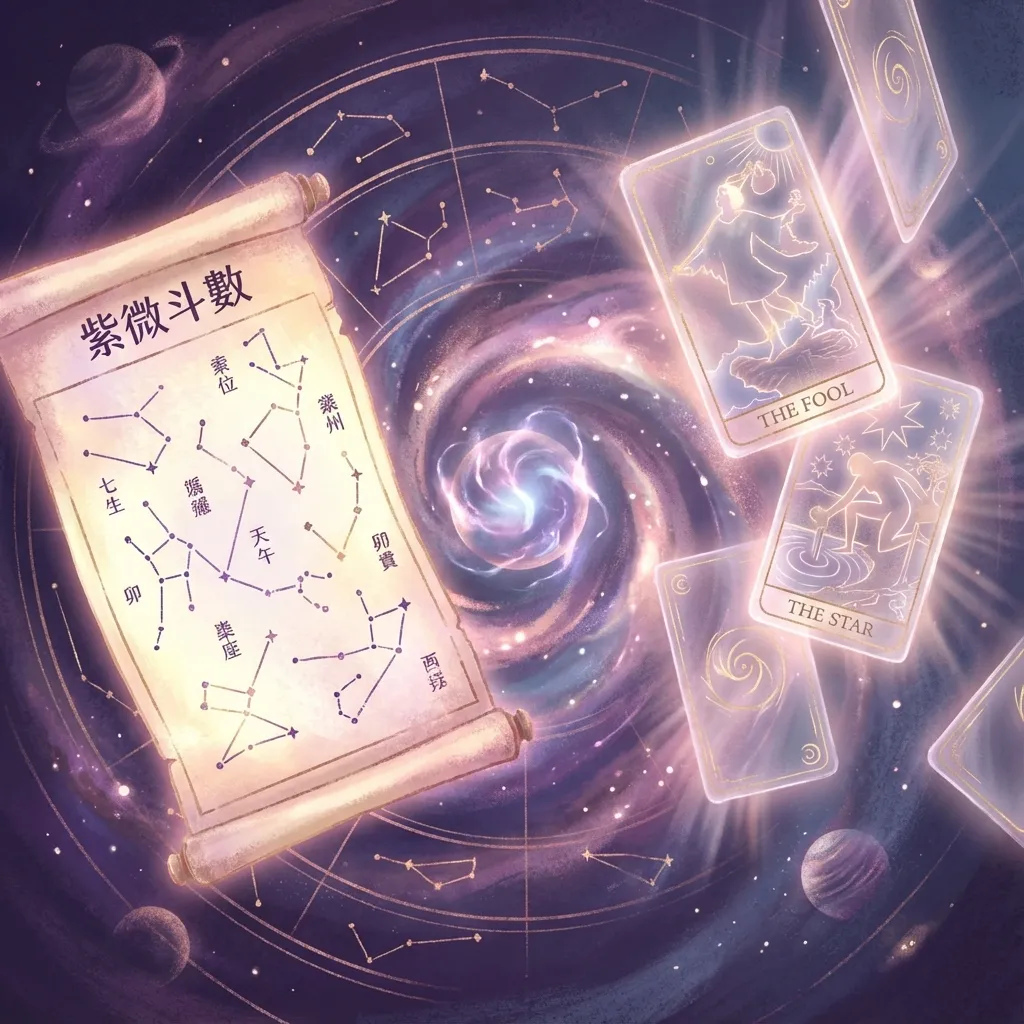
What happens when millennia of Eastern wisdom meet Western mysticism?
Zi Wei Dou Shu carries the essence of ancient Chinese astronomy and I Ching studies, while Tarot cards bring together European mysticism, astrology, and psychology. Both are significant tools for exploring self-awareness and personal understanding, but their operating principles and suitable contexts differ greatly.
If you're wondering which method of insight to choose, this article will provide a detailed comparison of Zi Wei Dou Shu and Tarot cards, helping you find the spiritual tool that best resonates with you.
Zi Wei Dou Shu: Ancient Chinese Astrology
What is Zi Wei Dou Shu?
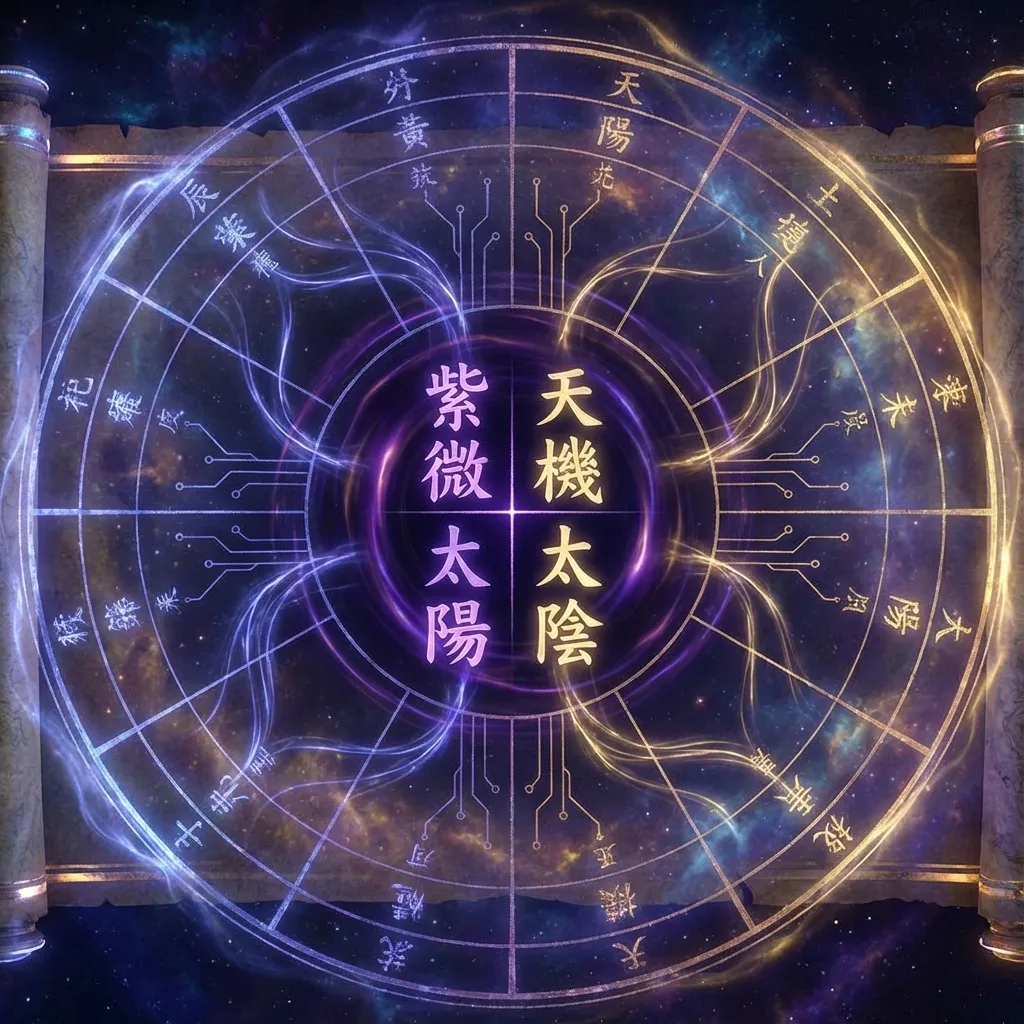
Zi Wei Dou Shu is a major branch of traditional Chinese metaphysical studies, ranked as the foremost of the 'Five Great Divination Arts'. It is believed to have been created by the Taoist master Chen Tuan (872-989 AD) during the Five Dynasties period, through his observation of stars. It developed and refined over the Song, Ming, and Qing dynasties, gradually forming a precise system of destiny analysis.
The core philosophy of Zi Wei Dou Shu is 'the unity of heaven and humanity' – believing that celestial phenomena and earthly events influence each other. By using your birth year, month, day, and hour (based on the lunar calendar), a unique birth chart can be plotted for you. This birth chart is like a blueprint of your life, reflecting personality traits, life experiences, and the ebb and flow of your journey.
Structure of a Zi Wei Dou Shu Birth Chart
A Zi Wei Dou Shu birth chart comprises Twelve Palaces, each representing different aspects of life:
| Palace | Meaning |
|---|---|
| Life Palace | Personality, general life overview |
| Siblings Palace | Siblings, sibling relationships |
| Spouse Palace | Marriage, relationships, partner |
| Children Palace | Children, fertility, romantic encounters |
| Wealth Palace | Financial outlook, money management approach |
| Health Palace | Health, physical condition |
| Travel Palace | Travel, social interactions, interpersonal relationships |
| Friends Palace | Friends, subordinates, social network |
| Career Palace | Career, work, professional path |
| Property Palace | Real estate, home environment |
| Virtue Palace | Mental state, spiritual well-being |
| Parents Palace | Parents, elders, appearance |
The birth chart also features Fourteen Major Stars (main stars), including Zi Wei Star, Tian Ji Star, Tai Yang Star, Wu Qu Star, Tian Tong Star, Lian Zhen Star, Tian Fu Star, Tai Yin Star, Tan Lang Star, Ju Men Star, Tian Xiang Star, Tian Liang Star, Qi Sha Star, and Po Jun Star. These stars, when positioned in different palaces, create various combinations and interpretations.
Unique Aspects of Zi Wei Dou Shu
- Detailed Temporal Insights: Can analyze trends for major cycles (ten-year periods), minor cycles (annual), monthly, and even daily outlooks.
- Comprehensive Life Blueprint: The Twelve Palaces cover all aspects of life, offering in-depth and nuanced analysis.
- Objective Foundational Data: Based on birth time, the chart plotting results are fixed and do not change with emotional fluctuations.
- Long-Term Planning Insights: Suitable for understanding overall life trends and assisting with long-term planning.
Tarot Cards: A Mirror to the Soul from Western Mysticism
What are Tarot Cards?
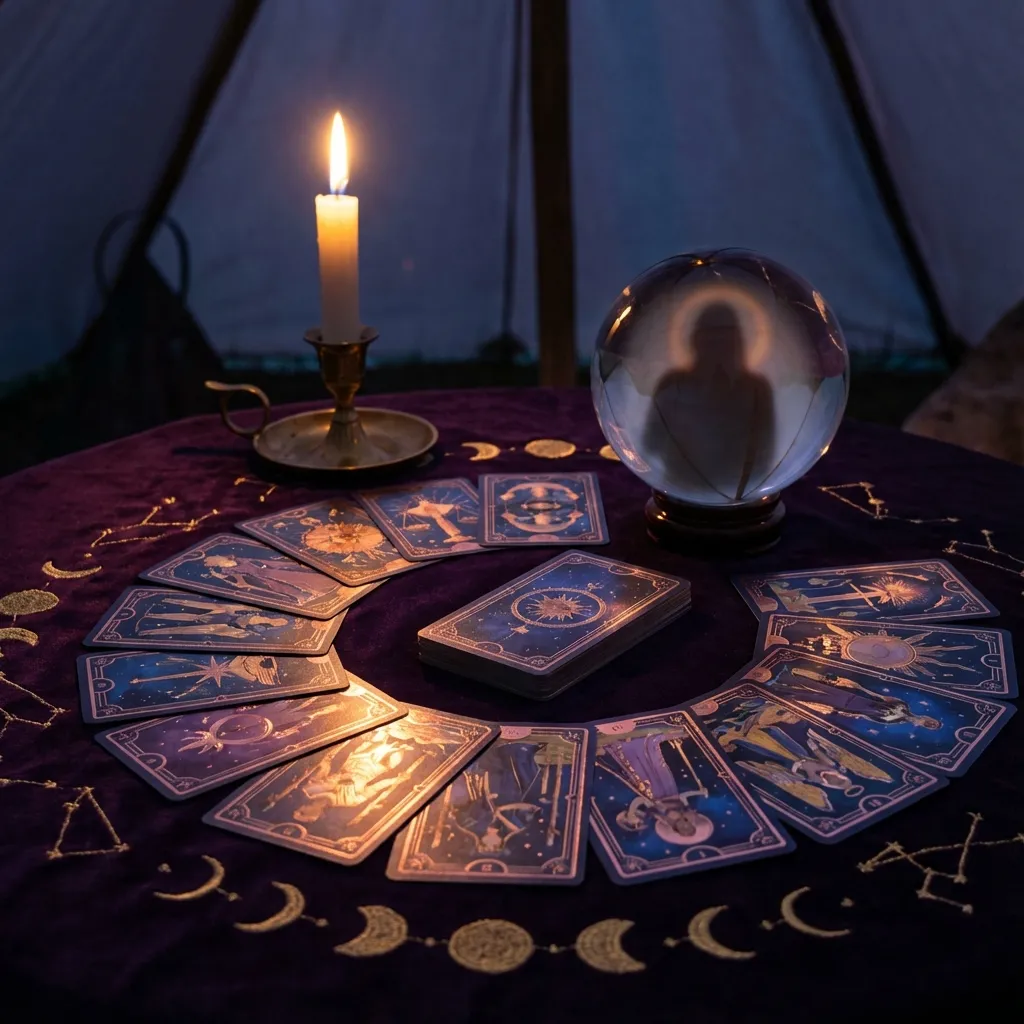
Tarot cards originated in mid-15th century Europe, initially as a card game for nobles, gradually evolving into a tool for divination. The elements and symbols of Tarot cards blend diverse cultures, including ancient Egyptian mythology, Jewish mysticism (Kabbalah), astrology, and numerology, forming a unique system of insight.
A Tarot deck consists of 78 cards, divided into the Major Arcana (22 cards) and the Minor Arcana (56 cards). The Major Arcana represent significant life themes and spiritual growth, while the Minor Arcana reflect various aspects of daily life.
How Tarot Cards Work
The principles behind a tarot reading are closely related to the concept of 'Synchronicity' proposed by psychologist Carl Jung. Jung believed that there are no pure 'coincidences' in the world; seemingly unrelated events can hold meaningful connections.
The process of a tarot reading involves the querent focusing through meditation, transmitting conscious questions to the subconscious, and then, through the act of drawing cards, 'attracting' meaningful cards from the deck. These cards reflect not an external destiny, but rather the querent's deepest thoughts, fears, and desires.
In other words, Tarot cards act like a mirror, helping you see your subconscious, offering another perspective on situations, and assisting you in understanding yourself better.
Key Features of Tarot Cards
- Immediate Insights: Focuses on present issues, providing immediate insights.
- High Specificity: Can be interpreted for specific questions.
- Interactive Nature: The querent's mindset and focus can influence the interpretation.
- Rich Visuals: Conveys messages through imagery and symbols, making them intuitive and easy to understand.
Core Differences in Divination Principles
The most fundamental difference between Zi Wei Dou Shu and tarot cards lies in their distinct divination principles:
| Comparison Item | Zi Wei Dou Shu | Tarot Cards |
|---|---|---|
| Core Basis | Birth Time (Innate Destiny Blueprint) | Current Energy (Subconscious) |
| Birth Chart Stability | Fixed and Unchanging | Results Vary with Each Draw |
| Scope of Insight | Lifelong Trends, Long-term Outlook | Short-term, Immediate Concerns |
| Degree of Objectivity | More Objective (Data-driven) | More Subjective (Intuition-driven) |
| Repeatability | Same Birth Chart Can Be Interpreted Repeatedly | Not Advisable to Re-read for the Same Question Short-term |
Zi Wei Dou Shu falls under the category of 'destiny analysis'. It emphasizes the innate destiny blueprint derived from one's birth time. Your birth chart is established at the moment of your birth, and the results remain consistent regardless of when it is cast. A practitioner analyzes the birth chart to offer insights into your personality tendencies, major life cycles, and long-term trends, such as annual influences.
Tarot cards, on the other hand, fall under the category of 'divination'. They emphasize the current energy state and subconscious reflections. The outcome of each draw can vary, as it reflects your present psychological state and energy. This is why there's a saying in tarot, "The first consultation reveals; repeated inquiries disrespect, and disrespect yields no further guidance" – it's generally not advisable to repeatedly ask the same question within a short period.
Suitable Question Types
Questions Suitable for Zi Wei Dou Shu
Zi Wei Dou Shu excels at providing macro, long-term, and comprehensive analysis for questions such as:
- Personality Analysis: What are my innate personality traits? What types of work might align with my strengths?
- Long-term Outlook: What might the overall trends be for the next decade? When might be a favorable time to consider starting a business?
- Life Planning: What age ranges might be indicated for significant life events like marriage? When might financial opportunities be more prominent?
- Career Direction: What career paths might resonate with me? Am I more inclined towards entrepreneurship or employment?
- Relationship Dynamics: What insights can be gained about the compatibility between myself and another person based on our birth charts? What might be the nature of our connection?
- Financial Insights: What potential avenues for wealth might be indicated? What financial approaches might be more aligned with my profile?
In essence, if you're seeking to understand your overall life blueprint, Zi Wei Dou Shu can offer valuable perspectives.
Questions Suitable for Tarot Cards
Tarot cards excel at addressing specific, short-term, and focused questions:
- Relationship Queries: What might be the current emotional landscape between us? What potential directions could this relationship take?
- Career Choices: What insights can guide my decision about accepting this job offer? What might be the implications of leaving my current position now?
- Interpersonal Challenges: What might be contributing to this person's sudden distance? How can I approach mending this relationship?
- Decision Guidance: What perspectives can help me choose between option A and option B? What considerations might be important regarding this investment?
- Self-Exploration: What is my current state of being? What are my true inner desires?
- Event Reflection: What potential influences might affect the smooth progress of this plan? What insights can be gained regarding the outcome of this interview?
If you have specific concerns you're seeking to address, tarot cards can offer more direct guidance for reflection. Please remember that for financial, legal, or medical matters, it is always advisable to consult with qualified professionals.
Reliability and Trustworthiness
Reliability of Zi Wei Dou Shu
The reliability of Zi Wei Dou Shu insights can be influenced by several factors:
- Precision of Birth Time: A difference of even one 'shichen' (two-hour period) can result in a different birth chart.
- Practitioner's Expertise: The depth of interpretation for the same birth chart can vary significantly among different practitioners.
- Choice of School: Different schools, such as San He Pai or Fei Xing Pai, each have their unique characteristics and interpretation methods.
A strength of Zi Wei Dou Shu lies in its potential for reflection on past events – you might observe how past occurrences align with insights from your birth chart. For example, if a practitioner suggests a period of potential financial opportunity in a certain year, and you reflect on having experienced financial gains during that time, it can offer a sense of alignment with the system's framework.
Reliability of Tarot Cards
The reliability of tarot card insights can also be influenced by various factors:
- Seeker's Mindset: A focused and relaxed state can contribute to clearer insights.
- Question Formulation: The more specific and clear the question, the more focused the guidance received.
- Reader's Interpretation Ability: This includes their depth of understanding of card meanings and intuitive sensitivity.
A unique aspect of tarot is that it serves as a tool for reflection on potential paths, rather than predicting an unchangeable destiny. It can illuminate "how things might unfold if the current situation persists." If you choose to shift your perspective or actions, the potential future trajectory may also evolve.
Which Offers More Relevant Insights?
There isn't a single answer to this question. Both tools excel in different areas, much like asking "which is more accurate, a thermometer or a scale?" – they measure different aspects.
- For understanding broad life directions and long-term trends, Zi Wei Dou Shu can offer valuable perspectives.
- For addressing immediate, specific concerns, tarot cards might provide more practical guidance for reflection.
Many professional practitioners often utilize multiple tools, allowing Zi Wei Dou Shu and tarot cards to complement each other and offer a more comprehensive analysis.
Comparison of Learning Difficulty
Zi Wei Dou Shu: Easy to Learn, Difficult to Master
Zi Wei Dou Shu is widely recognized as a more challenging system to learn:
- Extensive System: It involves numerous concepts such as the Twelve Palaces, Fourteen Main Stars, Four Transformations (Si Hua Fei Xing), Auxiliary Stars, and more.
- Multiple Schools: There are various schools like San He Pai, Fei Xing Pai, Tian Ji Pai, each with distinct interpretation methods.
- Requires Solid Foundation: A thorough understanding of basic principles like star characteristics, palaces, and transformations is essential.
- Practical Experience is Key: Extensive real-world case studies are needed to enhance interpretation skills.
Generally, grasping the basic concepts might take 3-6 months, while being able to independently interpret a birth chart could take 1-2 years. Achieving mastery often requires decades of accumulated experience.
For beginners, it is suggested to:
- Avoid self-learning solely from fragmented online resources, as this can lead to confusion.
- Choose a specific school or teacher for systematic learning.
- Ask questions promptly to avoid unnecessary detours in your learning journey.
Tarot Cards: Easier to Get Started
In comparison, tarot cards have a lower barrier to entry:
- Visual Learning: Meanings can often be associated with the card imagery.
- Abundant Resources: A wide selection of books, online tutorials, and courses is available.
- Self-Study Feasible: Basic card meanings are relatively consistent, making self-study a viable option.
- Ample Practice Opportunities: You can practice readings for yourself or friends at any time.
Basic introduction might only take 1-3 months, and being able to offer readings for friends could take six months to a year. However, achieving a professional level also requires long-term accumulation of experience.
The learning curve for tarot is often described as "gentle at the beginning, steep later on" – while card meanings are relatively easy to remember, flexibly interpreting all 78 cards in various contexts requires extensive accumulated experience.
Learning Difficulty Summary
| Comparison Item | Zi Wei Dou Shu | Tarot Cards |
|---|---|---|
| Entry Difficulty | ★★★★☆ | ★★☆☆☆ |
| Mastery Difficulty | ★★★★★ | ★★★★☆ |
| Self-study Feasibility | Lower | Higher |
| Time to Get Started | 3-6 months | 1-3 months |
| Resource Availability | More difficult (often requires a teacher) | Easier (abundant books) |
When to Use Which?
Scenarios for Choosing Zi Wei Dou Shu
Consider Zi Wei Dou Shu in the following situations:
- To explore your innate personality traits and life lessons
- For long-term life planning (career, relationships, finances)
- To gain insights into potential trends for the coming years
- If you have a precise birth time
- If you're looking for a life guide that can be revisited
- When preparing for significant life decisions (e.g., relocation, starting a business, marriage)
Scenarios for Choosing Tarot Cards
Consider Tarot cards in the following situations:
- When you have a specific question or area of confusion to explore
- When you need immediate insights and can't wait
- To understand the current dynamics and potential directions of a relationship
- If you don't know someone's birth time
- To gain a different perspective on a situation
- When facing a choice between two options and seeking insights
Can They Be Used Together?
Absolutely! Many metaphysical practitioners suggest: "Zi Wei Dou Shu for the broader trends, Tarot for the present moment":
- First, use Zi Wei Dou Shu to understand overall life trends.
- Then, use Tarot cards to delve deeper into specific questions.
- Combining both offers both a macro perspective and micro insights.
For example, if Zi Wei Dou Shu suggests a favorable year for relationships, Tarot cards can further explore questions like, "Is this person I recently met suitable for developing a connection?"
Conclusion: Finding Your Metaphysical Tool

Zi Wei Dou Shu and Tarot cards, one an astrological wisdom from the East, the other a spiritual exploration from the West, each holds unique value.
Zi Wei Dou Shu can be likened to a detailed life map, indicating where the mountains are, where the rivers flow, and where potential challenges might arise. It can help you recognize your innate talents and limitations, allowing you to prepare for life's journey.
Tarot cards can be seen as a companion guide, offering insights when you feel lost and providing alternative perspectives when you're confused. They don't dictate which path you must take, but rather help you clarify your current situation to make your own choices.
Regardless of which you choose, the most important thing is to maintain an open yet non-dependent mindset. Metaphysical tools are resources to help us understand ourselves and inform our decisions, not to surrender our agency over our lives.